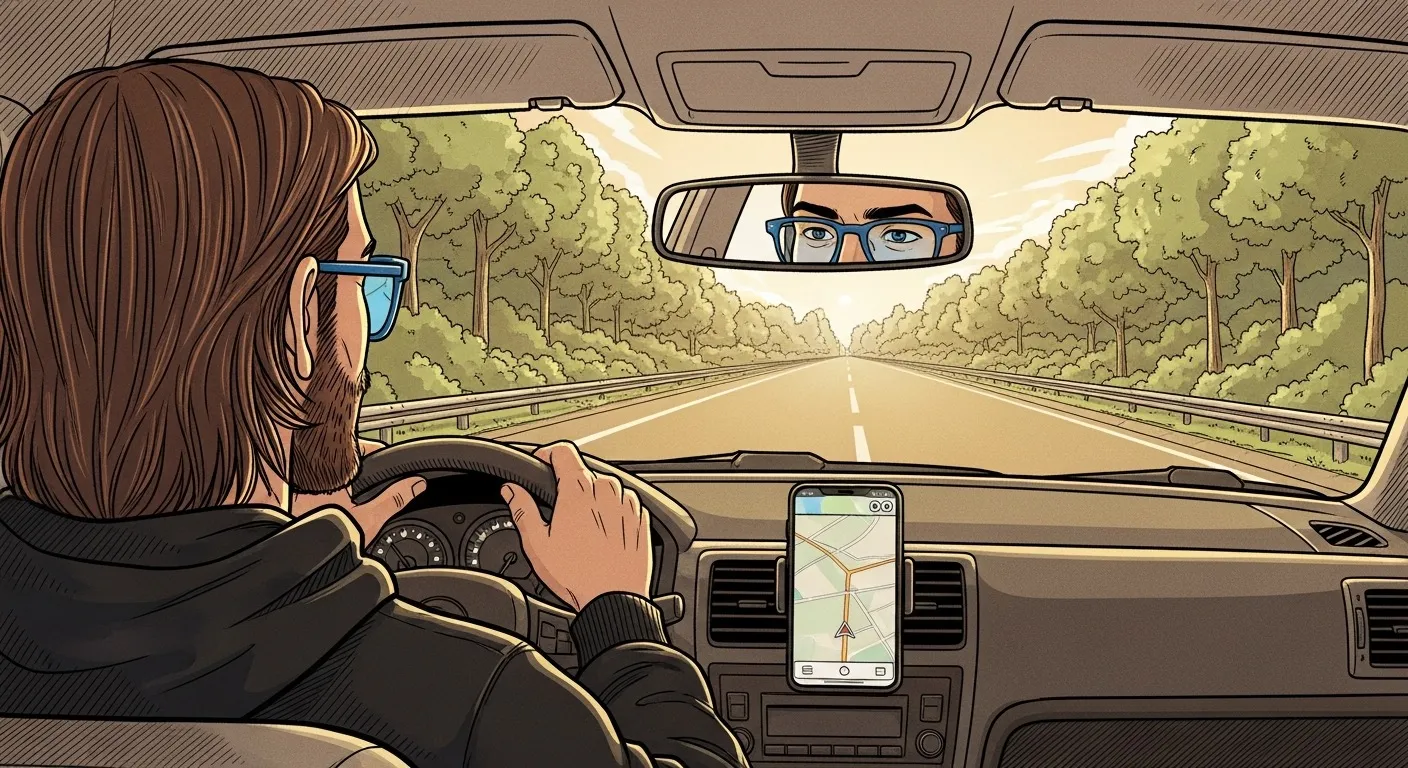
After 20 years on iOS, I recently switched to Android. I expected to miss iMessage, or the animations, or one of the many apps I learned to love during the years. The app I actually miss most is Apple Maps.
Not because it navigates me better than Google Maps. It often doesn’t. What Apple Maps does differently is harder to pin down. It’s calmer. The interface is quieter, less cluttered. But it goes deeper than visuals. Apple Maps doesn’t reroute you every 90 seconds to save 30 seconds of driving time. It picks routes that are pleasant to drive. Wider roads, fewer complicated turns, the scenic option when the time difference is negligible. It optimizes for a relaxed driving experience, not for shaving off every last minute.
Google Maps, by contrast, is relentless. It will send you through a residential neighborhood and three awkward left turns to save you one minute. It’s technically correct. It’s also stressful. The two apps solve the same problem with very different attitudes.
That difference is personality.
Software has always had personality, even before AI. Apple’s entire business is built on it. But most of the time, we talked about it in terms of design or UX. A nicer font, a smoother animation, a more intuitive layout. Personality was a surface-level quality.
With AI-powered tools, personality goes much deeper. It’s no longer just how something looks — it’s how something thinks, responds, and collaborates with you.
I notice this every day with Claude Code. It’s easy to drive. When I work with it, there’s a natural back-and-forth that feels comfortable. It doesn’t fight me. It doesn’t overwhelm me with options. It has opinions but holds them loosely. Working with Claude Code feels like pairing with someone who has good instincts and knows when to step back.
Codex, interestingly, went through a personality shift. Until a few weeks ago, it was dull to use. Technically capable, but joyless. Like driving a rental car that does everything fine but has no character. Recently, something changed. It became more engaging, more fun to work with. Same underlying capability, but the experience of using it shifted noticeably.
Then there are tools like GitHub Copilot or Kiro. They work. They’re useful. But if you asked me what their personality is, I’d struggle to answer. They feel like utilities — functional, competent, forgettable. No strong opinion about how things should be done, no distinct voice. They get the job done the way a microwave heats food: reliably, without leaving an impression.
This matters more now than it used to. When software was static — buttons, forms, workflows — personality was a nice-to-have. A well-designed app was more pleasant to use, but the core interaction didn’t change. You clicked the same buttons either way.
AI tools are different. They’re conversational. They make decisions. They have preferences, even if those preferences are just statistical tendencies. The software feels alive in a way that a settings dialog never did. And when something feels alive, personality becomes the thing that determines whether you want to spend time with it.
I think the companies that understand this will pull ahead. Not because their models are smarter — the capability gap between the top models is narrowing. But because their products feel like something. Apple understood this decades ago with hardware and software. Now the same principle applies to AI products.
The best software has always had a point of view. Now it just matters a lot more.